Staff
Staff
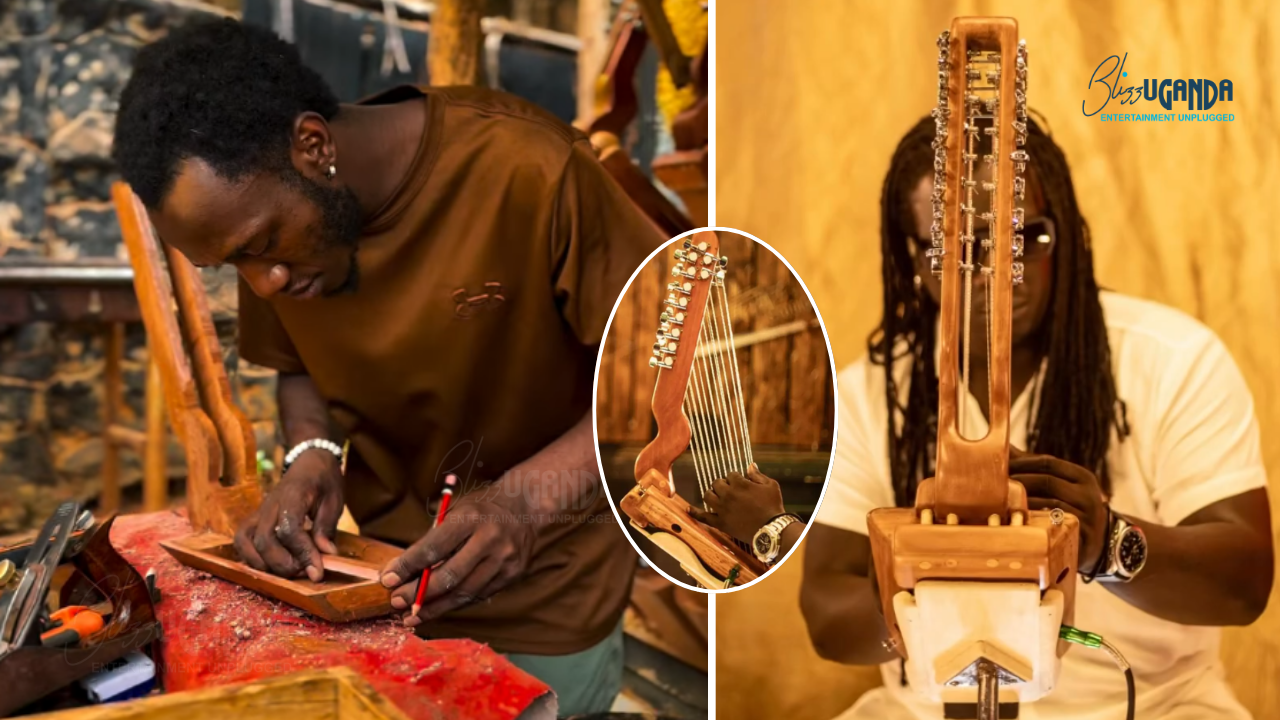
Ugandan multi-instrumentalist James Ssewakiryanga Junior, popularly known as Ssewa Ssewa, made a unique contribution to the country’s musical heritage through the invention of the Janzi, a modern string instrument inspired by the traditional Ugandan adungu.
Designed to preserve the spirit of traditional African music while meeting the demands of contemporary performances, the Janzi combines indigenous musical ideas with modern features that make it easier to tune, amplify and transport.
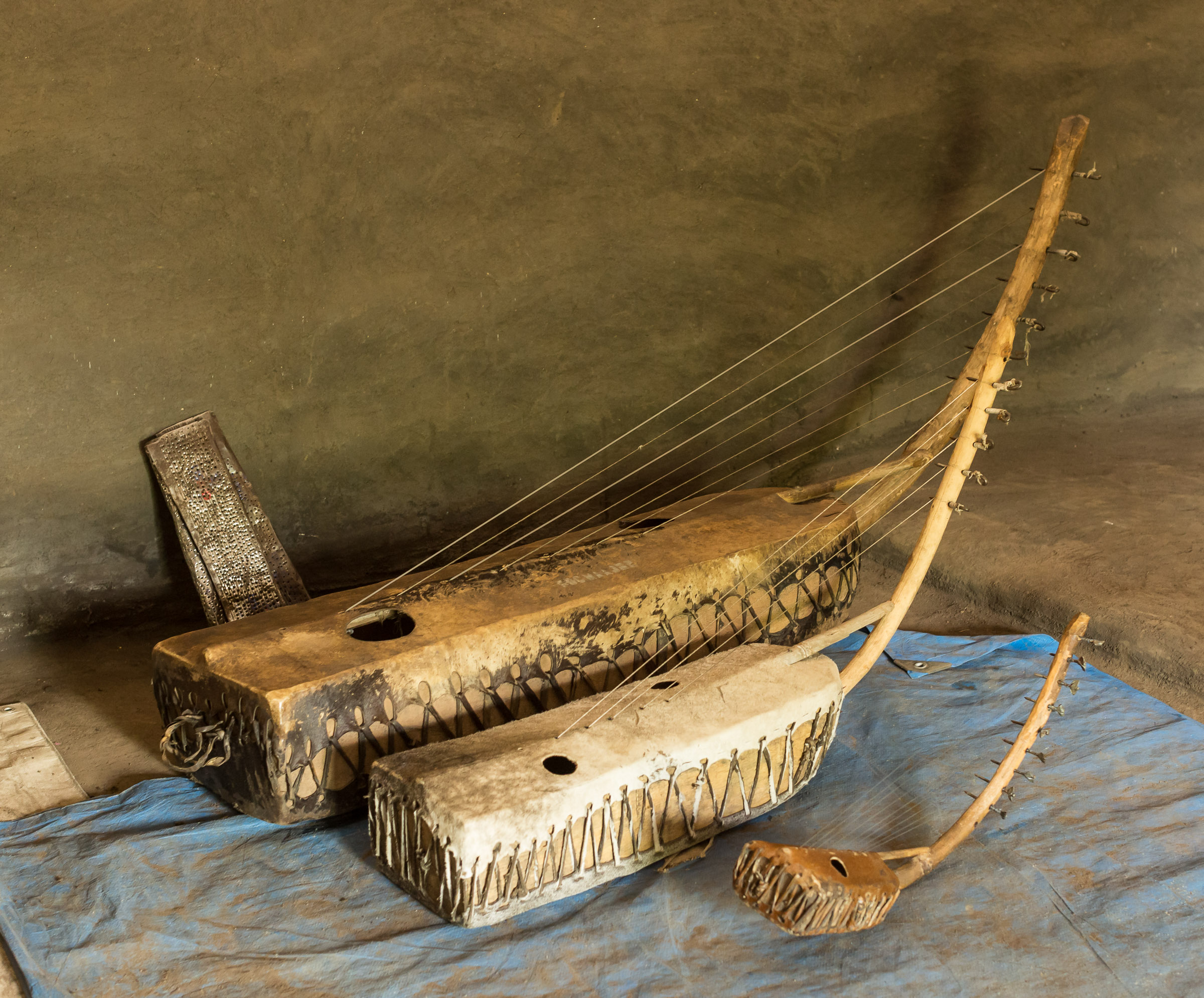
The instrument’s creation followed an experience Ssewa Ssewa encountered in 2014 while travelling abroad with a traditional adungu. At the airport, security personnel questioned the instrument because of the large metal nails used to secure and tune its strings, raising concerns about whether he could take it onto the plane.
The experience prompted him to think more deeply about the challenges of travelling and performing internationally with traditional Ugandan instruments.
Beyond the nails, he recognised that other features, including the animal hide stretched across the adungu’s resonator, could complicate travel and limit opportunities to introduce the instrument to audiences in different countries.
Ssewa Ssewa already played several traditional Ugandan instruments and wanted to find a way to make their sounds more accessible on international stages.
About a year later, an idea emerged while he was thinking about an old adungu he had set aside because its neck was broken.
He initially planned to repair it by finding a suitable piece of wood for a replacement neck. However, as he considered the instrument’s design, sound and amplification challenges, he decided to create something entirely new instead.
Rather than simply repair the adungu, he would develop a modern instrument based on its traditional principles.
This became the Janzi, which he named after his band, Janzi Band.
How the Janzi Differs From the Adungu
Although the Janzi draws inspiration from the adungu, its construction incorporates several important changes.
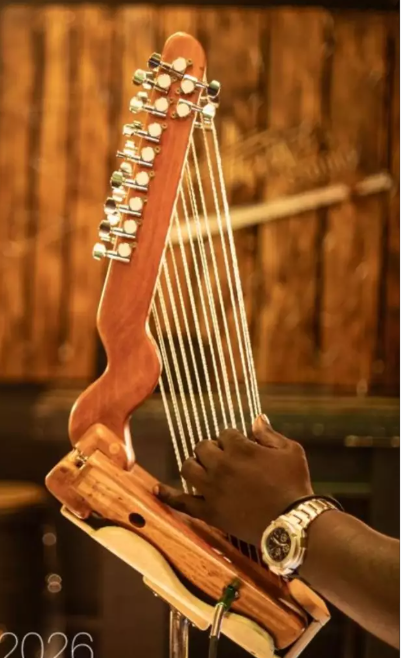
The instrument features two long, arched wooden necks arranged around a wooden sound box. Unlike the traditional adungu, which uses a hide-covered resonator, the Janzi has a wooden body and an integrated pickup that allows it to connect to sound systems for amplified performances.
It has 22 strings arranged in two parallel sets, with 11 strings on each side. The two sets are tuned differently: one uses a diatonic scale, while the other uses a pentatonic scale.
This arrangement allows Ssewa Ssewa to play with both hands, exploring different melodic and harmonic possibilities through a single instrument.
The Janzi also uses modern machine tuners instead of the traditional nails or wooden pegs associated with older designs. These tuners allow more precise adjustments and help address some of the practical challenges he encountered while travelling with the adungu.
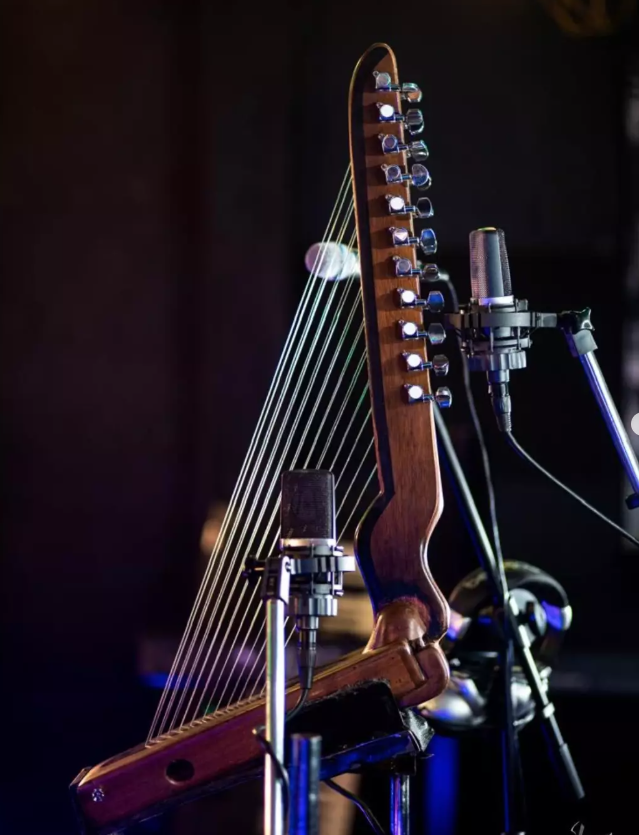
Although its appearance can remind people of the West African kora, the Janzi has its own construction and tuning system, rooted in Ssewa Ssewa’s intention to develop a distinctly Ugandan instrument.
Working With a Ugandan Craftsperson
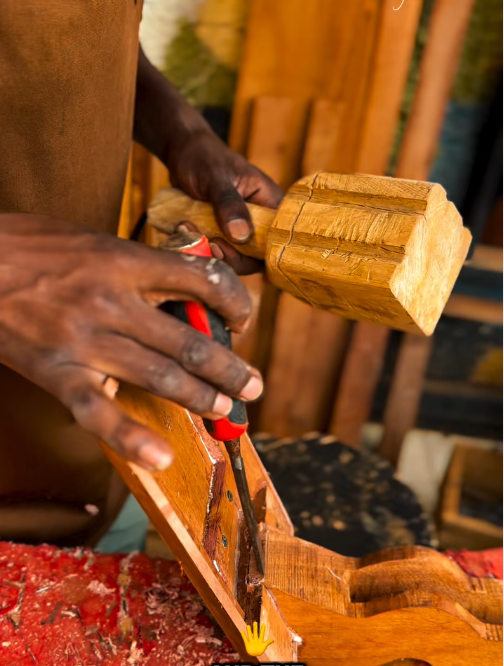
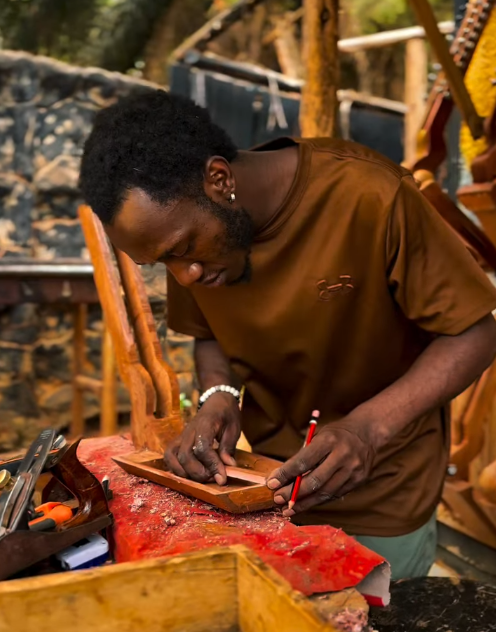
Creating the Janzi required more than a musical idea. Ssewa Ssewa worked with carpenter Steven Kibombo to develop the instrument, combining woodworking with considerations of sound, appearance, tuning and amplification.
The process also reflected the difficulties of making professional-quality traditional instruments in Uganda.
In his account of the invention, Ssewa Ssewa highlighted challenges such as finding suitable dry wood, securing adequate workshop and storage space, accessing specialised machinery, and obtaining components such as lightweight tuning pegs and electronic pickups.
He also pointed to a shrinking market for instruments based on traditional Ugandan designs as Western instruments gained popularity, making it harder for traditional instrument makers to sustain their craft.
The Janzi therefore emerged not only as a personal innovation but also as an attempt to demonstrate how indigenous musical traditions could evolve for modern use.
Recognition and Further Development
Ssewa Ssewa received a Utility Model Certificate in Uganda in 2017 for the creation of the stringed instrument featuring two scales. The Janzi was officially launched in Uganda on April 13, 2019, at Katonga Hall in Kampala.
He continued exploring new designs, including a three-neck version featuring diatonic, pentatonic and chromatic strings. These developments expanded his efforts to create instruments capable of serving a wider range of musical styles and performance settings.
The Janzi has become a central feature of performances by Ssewa Ssewa and Janzi Band, whose music combines traditional Ugandan instruments with contemporary sounds.
Through the instrument, he has sought to demonstrate that Ugandan musical heritage can remain relevant without losing its cultural foundation.
The Janzi’s combination of traditional inspiration, modern tuning and amplification offers one example of how musicians can adapt indigenous designs to meet the practical demands of contemporary performance and international travel.